Tungnath Trek with Kids: Age, Distance & Safety Guide
There is usually one moment on the Tungnath trail when a family stops talking. It may happen as the forest begins to open into rolling meadows

 By Saurabh Rana on 23 July 2026
Hidden among the mountains of Uttarakhand, Triyuginarayan Temple is a place where faith, mythology and natural beauty
Hidden among the mountains of Uttarakhand, Triyuginarayan Temple is a place where faith, mythology and natural beauty come together. The temple is best known as the sacred site where Lord Shiva and Goddess Parvati are believed to have been married in the presence of Lord Vishnu.
Located in Triyuginarayan village in the Rudraprayag district, this ancient temple attracts pilgrims, couples, spiritual travellers and people visiting the Kedarnath region. Its peaceful mountain setting, traditional stone architecture and continuously burning sacred fire give the temple a character unlike any other pilgrimage destination in Uttarakhand.
For travellers planning a visit, this guide covers the history and spiritual importance of Triyuginarayan Temple, how to reach it, the best time to visit, nearby attractions and essential travel tips.
Triyuginarayan Temple is situated in the village of Triyuginarayan in Uttarakhand’s Rudraprayag district. It stands at an elevation of approximately 1,980 metres in the Garhwal Himalayas.
The temple is located near Sonprayag, an important stop on the Kedarnath route. According to the Rudraprayag District Administration, Triyuginarayan can be approached from Sonprayag by road, with an older walking route also connecting the two places.
The village is surrounded by forested slopes and mountain scenery. Compared with the busier pilgrimage centres, Triyuginarayan offers a quieter and more intimate spiritual experience.
According to Hindu tradition, Goddess Parvati performed intense penance to win the love of Lord Shiva. After accepting her devotion, Lord Shiva agreed to marry her.
Their divine wedding is believed to have taken place at Triyuginarayan in the presence of gods, goddesses and sages. Lord Vishnu is said to have performed the responsibilities of Goddess Parvati’s brother, while Lord Brahma conducted the wedding rituals as the priest.
The stone known as Brahma Shila, situated in front of the temple, is traditionally regarded as the exact place where the celestial marriage ceremony took place.
This connection with the union of Shiva and Parvati has made Triyuginarayan one of India’s most meaningful temples for married couples and those seeking blessings for a happy relationship.
The name Triyuginarayan is formed from three words:
The name is associated with the belief that the sacred flame at the temple has continued through three yugas. For this reason, the temple is also known as the Akhand Dhuni Temple.
The flame represents continuity, devotion and the eternal nature of the union between Lord Shiva and Goddess Parvati.
The most distinctive feature of Triyuginarayan Temple is the sacred fire burning in the havan kund in front of the main shrine.
According to Hindu belief, this is the same fire that witnessed the wedding of Lord Shiva and Goddess Parvati. Devotees offer pieces of wood to the flame and collect a small quantity of the sacred ash as a blessing.
Many married couples believe that receiving blessings from the Akhand Dhuni strengthens their relationship and brings peace to their family life. Unmarried devotees may also pray for a suitable life partner and a harmonious marriage.
The eternal flame is more than a religious symbol. It creates a powerful connection between the temple’s ancient story and the prayers offered by present-day visitors.
Brahma Shila is a sacred stone located near the eternal fire. It is believed to mark the place where Lord Shiva and Goddess Parvati sat during their wedding ceremony.
Devotees pause near the stone to offer prayers and remember the divine union. Couples visiting the temple often seek blessings here for love, understanding and lifelong companionship.
The presence of Brahma Shila, the havan kund and the ancient Vishnu shrine makes the temple courtyard the spiritual centre of the Triyuginarayan experience.
Although Triyuginarayan is famous for the marriage of Lord Shiva and Goddess Parvati, the principal temple is dedicated to Lord Vishnu.
The shrine houses Lord Vishnu in the form of Narayan, accompanied by Goddess Lakshmi and Goddess Saraswati. Lord Vishnu’s presence is connected with his role in the divine wedding ceremony.
The temple’s stone architecture reflects the traditional Himalayan style. Its appearance is often compared with the temples of the Kedarnath region, with a stone-built structure designed to withstand the mountain climate.
The Ministry of Tourism’s Incredible India portal describes Triyuginarayan as both a sacred Vishnu temple and a site closely associated with the wedding of Shiva and Parvati.
Several sacred water tanks, or kunds, are located near the temple. They form an important part of the religious traditions associated with Triyuginarayan.
The main kunds are:
Rudra Kund is traditionally associated with ritual bathing. Pilgrims may visit it as part of their spiritual journey to the temple.
Vishnu Kund is connected with Lord Vishnu, who is believed to have played an important role in the divine wedding.
Brahma Kund is associated with Lord Brahma, who is believed to have conducted the marriage ceremony.
According to local belief, Saraswati Kund supplies water to the other sacred kunds. The water source is considered spiritually significant by devotees.
Visitors should respect local customs and current instructions when approaching the kunds. Avoid using soap, shampoo or any substance that could pollute the sacred water.
Triyuginarayan has become an increasingly popular spiritual wedding destination in Uttarakhand. Couples are drawn to the idea of getting married at the place associated with the divine union of Lord Shiva and Goddess Parvati.
Unlike a large luxury wedding venue, Triyuginarayan offers a traditional mountain setting centred on faith and simplicity. Weddings here are generally better suited to couples who value spiritual meaning over elaborate decoration.
Anyone planning a Triyuginarayan Temple wedding should organise the arrangements well in advance. Important considerations include:
The village has limited infrastructure compared with major wedding destinations. A small and carefully planned ceremony is therefore more practical than a very large gathering.
Couples should confirm all arrangements directly with the appropriate temple representatives, local authorities or a reliable local coordinator before making payments.
Triyuginarayan is connected with the Kedarnath pilgrimage route. Most travellers first reach Haridwar or Rishikesh and then continue towards Rudraprayag, Guptkashi and Sonprayag.
A commonly followed road route is:
Delhi → Haridwar → Rishikesh → Devprayag → Srinagar → Rudraprayag → Guptkashi → Sonprayag → Triyuginarayan
Road and traffic conditions can change, particularly during the monsoon, so travellers should check the latest local information before departure.
Jolly Grant Airport near Dehradun is the nearest major airport. From the airport, travellers can hire a taxi or arrange a private vehicle towards Rudraprayag, Guptkashi, Sonprayag and Triyuginarayan.
The mountain journey is long, so an overnight stop may be advisable depending on the arrival time.
Rishikesh is the nearest railway station listed by the Ministry of Tourism for this region. Haridwar is another convenient railhead with connections to several major Indian cities.
From Rishikesh or Haridwar, travellers can continue by taxi, private vehicle or bus towards the Kedarnath region.
Triyuginarayan can be reached from Sonprayag by mountain road. The Rudraprayag district website describes it as approximately 14 kilometres by road from Sonprayag, along with an older walking approach of about five kilometres.
Distances and accessible routes may change because of road development, weather or local traffic controls. Confirm the current route before travelling.
Travellers interested in walking may use the traditional trail from the Sonprayag side when local conditions permit.
The trail offers mountain views and a more traditional approach to the temple, but it should not be attempted without checking its current condition. During rain, snow or poor visibility, the path may become slippery or difficult.
Wear footwear with a good grip, carry water and avoid beginning the walk late in the day.
The best time to visit depends on the type of experience you want and the prevailing road conditions.
These months generally offer pleasant daytime conditions, although mornings and evenings can remain cold. This period is also connected with the main Kedarnath pilgrimage season, so nearby routes may be busy.
The monsoon brings greenery to the mountains but also increases the risk of heavy rain, landslides, falling stones and road disruption.
Check official weather and road advisories before travelling during this period. Do not continue towards the temple when the local administration advises against travel.
The post-monsoon period often offers clearer mountain views and cooler weather. It is a popular time for pilgrimages, photography and small wedding ceremonies.
Temperatures fall as winter approaches, so warm clothing is essential.
Winter can bring very cold conditions and snowfall. Road access, local transport and accommodation may be limited.
Travellers planning a winter visit should confirm road conditions, temple access and available services before leaving.
The Incredible India portal currently publishes visiting hours of:
Temple timings can change because of festivals, ceremonies, weather or local requirements. Confirm the current opening hours before travelling, especially if you are visiting from a distant location on the same day.
An early visit generally provides a quieter atmosphere and additional time to explore the village and sacred kunds.
A trip to Triyuginarayan can be combined with several religious and scenic destinations in the Kedarnath region.
Sonprayag is an important stop on the Kedarnath route and is located near the confluence of the Mandakini and Basuki rivers. It serves as a transport and accommodation point for many pilgrims.
Gaurikund is associated with Goddess Parvati’s penance and is the traditional starting point of the Kedarnath trek. Its connection with Parvati makes it especially meaningful when combined with Triyuginarayan.
Kedarnath is one of the twelve Jyotirlingas and one of the principal temples of the Chardham Yatra. Travellers planning to include Kedarnath must complete the necessary registration and prepare for the trek or authorised helicopter journey.
Guptkashi is known for the Vishwanath Temple, Ardhanarishwar Temple and Manikarnika Kund. According to tradition, Lord Shiva remained hidden here before proceeding towards Kedarnath.
Ukhimath serves as the winter seat of Lord Kedarnath. It is an important religious town with several ancient temples and attractive mountain views.
Chopta is known for forests, meadows and Himalayan scenery. It is also the base region for the Tungnath and Chandrashila trek.
Mountain weather can change quickly, even during the summer. Pack according to the season and keep important items in a small day bag.
Carry:
If you are combining the visit with Kedarnath, prepare separately for the trek and complete the required Yatra registration.
Triyuginarayan is a living village as well as a pilgrimage destination. Visitors should help protect its religious atmosphere and mountain environment.
Use reusable water bottles, avoid single-use plastic and carry your waste back to an appropriate disposal point. Keep noise levels low and do not block village paths with vehicles.
Wedding groups should be particularly careful about plastic decorations, food waste, loud music and crowd management. The spiritual character of the destination should remain more important than elaborate event arrangements.
Supporting local homestays, guides, drivers and small businesses can also help tourism benefit the village community.
The temple is famous as the place where Lord Shiva and Goddess Parvati are believed to have been married. It is also known for the sacred fire that is believed to have continued since the divine wedding.
The main temple is dedicated to Lord Vishnu, although the site is closely associated with Lord Shiva and Goddess Parvati.
It is located in Triyuginarayan village in the Rudraprayag district of Uttarakhand, near Sonprayag and the Kedarnath route.
The Akhand Dhuni is the continuously maintained sacred fire in front of the temple. According to tradition, it witnessed the wedding of Lord Shiva and Goddess Parvati.
Wedding ceremonies are organised at Triyuginarayan, but couples must confirm temple procedures, local permissions, priest availability and logistical arrangements in advance.
The village can be approached by mountain road from the Sonprayag side. Current access should be checked before travelling, especially during the monsoon and winter.
A road approach is available, while a traditional walking route also connects the Sonprayag area with Triyuginarayan. The exact access option depends on current road and trail conditions.
Allow approximately one to two hours for darshan, the eternal flame, Brahma Shila and the sacred kunds. Additional time will be required if the temple is crowded or a special ceremony is taking place.
Yes. The temple is located near the Kedarnath route and can be included before or after a Kedarnath visit. Allow enough time and avoid planning both visits too tightly.
Senior citizens can visit by road when access is open, but the mountain journey, uneven surfaces and cold weather should be considered. Travellers with medical conditions should consult their doctor before visiting.
Triyuginarayan Temple is more than a stop on the Kedarnath route. It is a place where an ancient story of devotion continues through a sacred flame, a stone courtyard and the prayers of countless visitors.
Whether you come for spiritual blessings, to learn about the marriage of Lord Shiva and Goddess Parvati, or to experience the quiet beauty of a Himalayan village, Triyuginarayan leaves a lasting impression.
Plan your journey carefully, respect the temple’s traditions and allow enough time to experience the destination without rushing. In the calm surroundings of Triyuginarayan, the story of divine love feels not only remembered, but still alive.
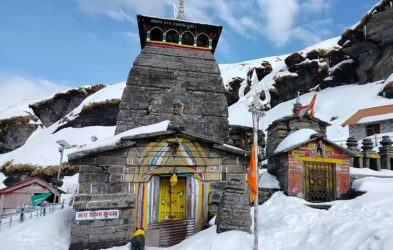
There is usually one moment on the Tungnath trail when a family stops talking. It may happen as the forest begins to open into rolling meadows
Senior-friendly pilgrimage planning Can Senior Citizens Complete the Yamunotri Trek? Yes, many senior pilgrims visit Yamunotri every season—but the right question is not simply, “Can they walk?” It is, “Which…
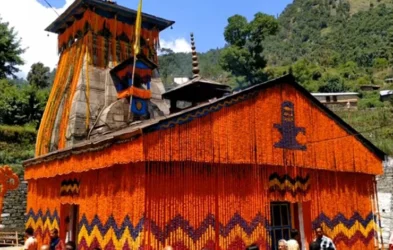
Hidden among the mountains of Uttarakhand, Triyuginarayan Temple is a place where faith, mythology and natural beauty

The Char Dham Yatra is one of India’s most sacred pilgrimages, taking devotees to Yamunotri, Gangotri, Kedarnath and Badrinath

The Chardham Yatra is not an ordinary holiday. It takes pilgrims through the high-altitude regions of Uttarakhand to Yamunotri, Gangotri, Kedarnath and Badrinath