Tungnath Trek with Kids: Age, Distance & Safety Guide
There is usually one moment on the Tungnath trail when a family stops talking. It may happen as the forest begins to open into rolling meadows
 By Bobby Dewan on 1 August 2026
Family Trek Information
| Detail | Practical Information |
|---|---|
| Starting point | Chopta, Uttarakhand |
| Chopta to Tungnath distance | Approximately 3.5 km one way |
| Tungnath to Chandrashila | Approximately 1.5 km farther, with a steeper climb |
| Tungnath altitude | Approximately 3,680 metres |
| Total time with children | Usually 6–8 hours for the return journey, including breaks |
| Trail type | Stone-paved mountain trail with long uphill sections |
| Difficulty for adults | Easy to moderate |
| Difficulty for children | Moderate because of the gradient, weather and altitude |
| Practical age range | Often more comfortable for active children aged 7–8 years and above; readiness matters more than age alone |
| Best family season | Generally late spring to early summer and post-monsoon autumn, subject to current weather and trail conditions |
According to Hindu tradition, Goddess Parvati performed intense penance to win the love of Lord Shiva. After accepting her devotion, Lord Shiva agreed to marry her.
Their divine wedding is believed to have taken place at Triyuginarayan in the presence of gods, goddesses and sages. Lord Vishnu is said to have performed the responsibilities of Goddess Parvati’s brother, while Lord Brahma conducted the wedding rituals as the priest.
The stone known as Brahma Shila, situated in front of the temple, is traditionally regarded as the exact place where the celestial marriage ceremony took place.
This connection with the union of Shiva and Parvati has made Triyuginarayan one of India’s most meaningful temples for married couples and those seeking blessings for a happy relationship.
Uttarakhand Tourism describes Tungnath as roughly 3.5 km from Chopta and Chandrashila as a steep additional 1.5 km. Its trek information places the complete outing at approximately 9–10 km and around 7–8 hours for both sides, depending on the route and pace.
Tungnath offers children something that photographs cannot fully explain. The trail changes every few turns. It begins near the meadows of Chopta, climbs through trees and open slopes, and gradually reveals wider Himalayan views.
There are no technical climbing sections on the regular route. Families do not need ropes or mountaineering skills in normal, snow-free conditions. The path is clearly defined, and the distance to the temple is shorter than many famous Himalayan treks.
Children also respond well to the small milestones along the way. A bend in the trail becomes the next goal. A meadow becomes a place for a snack break. A view of the temple roof can provide fresh energy when tired legs begin to slow down.
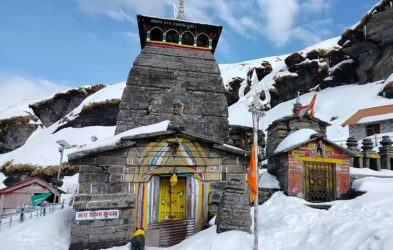
Most importantly, the journey is not only about trekking. Tungnath is part of the Panch Kedar tradition and is regarded as one of the world’s highest Shiva temples. For families, the day can become a gentle introduction to Himalayan geography, local faith, patience and respect for nature.
The words “3.5 km trek” can sound easy. On a level city road, that distance may take less than an hour. In Chopta, the same distance feels very different.
The trail climbs continuously and the air becomes thinner as you approach Tungnath. A child may walk quickly for the first 20 minutes and then suddenly lose energy. Weather can also change the difficulty. A dry path on a clear morning is much easier than wet stones, cold wind, fog or leftover snow.
For a family, the trek is better described as moderate rather than easy. The route is straightforward, but the combination of uphill walking and altitude demands patience.
A child does not need to be an athlete, but regular walking and a positive attitude help considerably. Families who treat the trek like a race usually find it harder than those who maintain a slow, steady rhythm.
There is no universal official minimum age that guarantees a child will be comfortable at Tungnath. Two children of the same age may respond very differently to walking, cold and altitude.
As a practical planning guide:
Age alone is not enough. Ask these questions before deciding:
If a child has a heart, lung, neurological or significant blood-related condition—or has previously reacted badly to altitude—consult a qualified doctor or paediatrician before the journey.
Tungnath sits at approximately 3,680 metres. At this elevation, the body receives less oxygen than it does at sea level. Fitness does not provide immunity from altitude illness, and children can be as susceptible as adults.
The safest approach is not a special drink, tablet or piece of equipment. It is allowing the body time to adjust.
Avoid driving directly from Delhi or another low-altitude city through the night and starting the trek immediately. Spend the first night at a lower Himalayan base such as Ukhimath or Sari, rest properly, and begin the trek the following morning only if everyone feels well.
The CDC’s high-altitude guidance recommends gradual ascent and notes that children are as susceptible to altitude illness as adults. Young children may show non-specific signs such as irritability, poor appetite or changes in sleep and activity.
Watch for:
If symptoms appear, do not continue higher. Stop, keep the child warm, assess the situation and descend if symptoms do not improve promptly. Severe breathlessness while resting, confusion, loss of coordination or unusual drowsiness requires urgent descent and medical assistance. The NHS altitude-sickness guide provides a useful overview of common warning signs.
A pulse oximeter may provide additional information, but it does not replace watching the child’s behaviour or seeking medical help. Do not give altitude medicine to a child without advice from an appropriately qualified doctor.
The best family pace often feels surprisingly slow to adults.
Begin before the trail becomes busy, but not so early that the child is walking in darkness or extreme cold. Let the child take short steps and stop for brief breaks before exhaustion appears. Long rests can make the body cold and make restarting difficult, so several short pauses are often better than one long halt.
Try dividing the route into small goals instead of repeatedly announcing the remaining distance. Walk to the next bend, the next open meadow or the next safe resting point. Allow the child to notice birds, flowers, clouds and the changing view.
Keep one adult behind or beside the child. A child should never be allowed to run downhill, disappear around bends or walk close to an exposed edge. On the descent, tired legs and loose concentration can make simple stone steps more difficult than they were during the climb.
Encouragement works; pressure does not. Avoid comparing siblings or promising a reward only if the child reaches the temple. Turning around at the right time is responsible mountain judgement, not failure.
For many families, Tungnath Temple should be the final destination.
Chandrashila is only about 1.5 km beyond the temple, but the trail becomes noticeably steeper and more exposed. Weather can change quickly, and snow or ice can make the ascent unsuitable for children without the correct equipment and an experienced local guide.
Consider Chandrashila only when:
Do not make a sunrise summit the default plan for young children. Darkness, cold, wind and early-morning ice add risks that are absent during a clear daylight trek.
The most comfortable family conditions are usually found during clear, snow-free periods.
This period can offer greener slopes, longer daylight hours and comparatively comfortable walking conditions. It is also popular, so accommodation and transport should be arranged in advance.
Clearer mountain views and crisp weather make autumn attractive. Temperatures fall quickly in the morning and evening, so children need proper layers.
Heavy rain can bring slippery trails, poor visibility, road disruptions and landslide risk. It is not the best season for a first Himalayan trek with children.
Snow transforms Chopta, but it also changes an ordinary stone trail into a more demanding mountain route. Deep snow, ice, extreme cold and limited services make winter unsuitable for most young beginners. Families considering a snow trek should use an experienced local operator, suitable equipment and a weather-dependent plan.
Tungnath Temple’s opening and closing dates vary each year. Check current temple, road and weather information shortly before travel rather than relying on an older blog post or social-media video.
The best time to visit depends on the type of experience you want and the prevailing road conditions.
These months generally offer pleasant daytime conditions, although mornings and evenings can remain cold. This period is also connected with the main Kedarnath pilgrimage season, so nearby routes may be busy.
The monsoon brings greenery to the mountains but also increases the risk of heavy rain, landslides, falling stones and road disruption.
Check official weather and road advisories before travelling during this period. Do not continue towards the temple when the local administration advises against travel.
The post-monsoon period often offers clearer mountain views and cooler weather. It is a popular time for pilgrimages, photography and small wedding ceremonies.
Temperatures fall as winter approaches, so warm clothing is essential.
Winter can bring very cold conditions and snowfall. Road access, local transport and accommodation may be limited.
Travellers planning a winter visit should confirm road conditions, temple access and available services before leaving.
Preparation does not need to feel like formal training. Start three or four weeks before departure and make it part of the family routine.
Do not exhaust the child with heavy exercise immediately before departure. Rest, sleep and hydration in the days leading up to the trek matter more than a last-minute workout.
Mountain weather changes quickly, so layers are more useful than one heavy jacket.
Adults should carry most shared equipment. A child’s bag should remain very light and should never become a test of toughness.
Begin early and take comfortable meal and washroom breaks. Check into your stay before dark. Keep the evening quiet, serve a familiar meal and ensure the child sleeps properly.
Drive to Chopta after an early breakfast. Start the trek in daylight and maintain a gentle pace. Treat Tungnath as the main goal. Attempt Chandrashila only if the child, weather and trail conditions are all favourable. Return to the lower overnight base rather than adding unnecessary travel after a tiring day.
Have a relaxed breakfast and begin the return drive. If the family still has energy, include only short roadside stops rather than another demanding trek.
Adding an extra night makes the trip more comfortable, particularly for younger children. Deoriatal can be included on a separate day, but combining Deoriatal, Tungnath and Chandrashila into one rushed schedule is not ideal for a child’s first Himalayan experience.
The mountains do not respond to deadlines. A flexible plan is the safest plan.
It can be suitable for healthy, active children when the route is snow-free, the weather is stable and the family ascends gradually. Children must be watched for altitude symptoms, and parents should be willing to turn back.
There is no universal official minimum age. As a practical range, many families find the trek more manageable for children aged seven or eight and above who walk regularly and can communicate discomfort clearly. Individual health, experience and weather matter more than a birthday alone.
The regular trek is approximately 3.5 km one way. The return distance is therefore around 7 km, excluding any additional walking near the temple.
Allow roughly six to eight hours for the complete return outing, including slow walking, snacks, rest and temple time. Some families will take longer, and that is perfectly acceptable.
Some young children may be capable of portions of the route, but the distance alone should not determine the decision. At this age, children may struggle to explain altitude symptoms or safely manage a long descent. Seek medical advice and choose a shorter, lower-altitude walk for a first trek when uncertain.
Chandrashila is steeper, higher and more exposed than the Tungnath section. Fit older children with previous trekking experience may attempt it in stable, snow-free weather with appropriate supervision. Tungnath is a better endpoint for most younger beginners.
Small seasonal stalls may operate along the route, but availability can change with weather and the pilgrimage season. Carry sufficient water and familiar snacks instead of depending entirely on shops.
No. The mountain trail and stone steps are not suitable for a stroller.
The main route is generally well-defined in normal conditions, but a knowledgeable local guide adds value when travelling with children, especially during uncertain weather, early or late in the season, or when considering Chandrashila.
Stop ascending and assess the child. Do not continue higher with possible altitude symptoms. If the headache persists, worsens or appears with nausea, dizziness, poor balance, unusual fatigue or behavioural changes, descend and seek medical help.
The best Tungnath memory may not be a photograph at the temple. It may be sharing a warm drink beside the trail, watching clouds move across the valley or hearing a child proudly describe the longest walk they have ever completed.
Plan the Tungnath trek with kids around comfort, curiosity and safety. Walk slowly. Notice changes in energy and behaviour. Keep Chandrashila optional. Most importantly, give yourself permission to turn back.
The mountain will remain. A child who returns home feeling happy, confident and respected will be far more eager to meet it again.
There is usually one moment on the Tungnath trail when a family stops talking. It may happen as the forest begins to open into rolling meadows
Senior-friendly pilgrimage planning Can Senior Citizens Complete the Yamunotri Trek? Yes, many senior pilgrims visit Yamunotri every season—but the right question is not simply, “Can they walk?” It is, “Which…
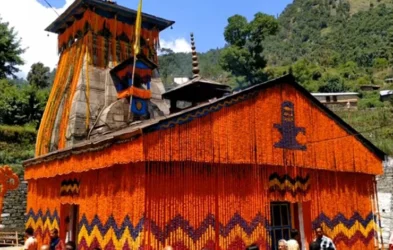
Hidden among the mountains of Uttarakhand, Triyuginarayan Temple is a place where faith, mythology and natural beauty

The Char Dham Yatra is one of India’s most sacred pilgrimages, taking devotees to Yamunotri, Gangotri, Kedarnath and Badrinath

The Chardham Yatra is not an ordinary holiday. It takes pilgrims through the high-altitude regions of Uttarakhand to Yamunotri, Gangotri, Kedarnath and Badrinath